
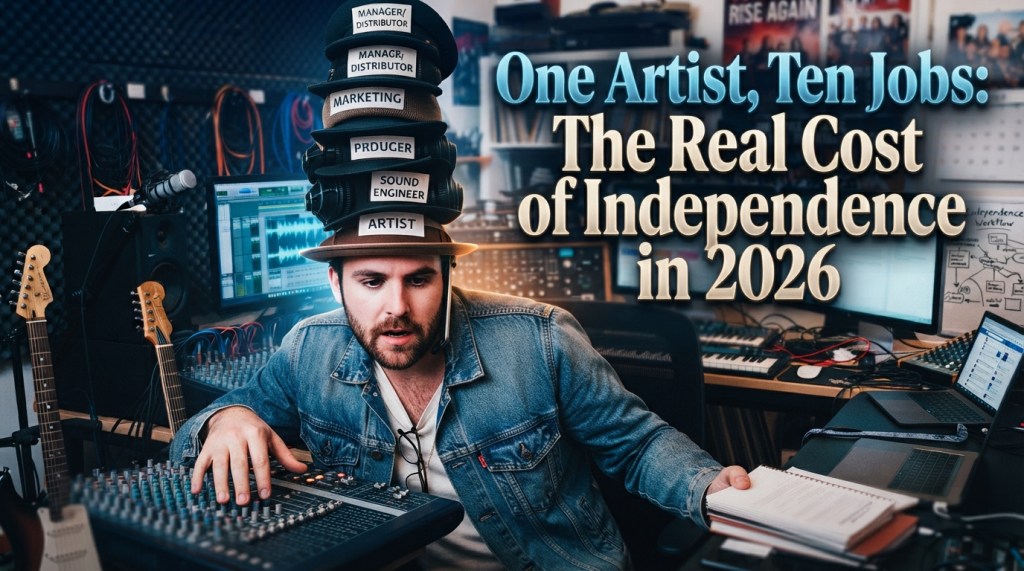
The Multi-Hat Tightrope: Surviving and Creating as an Independent Artist
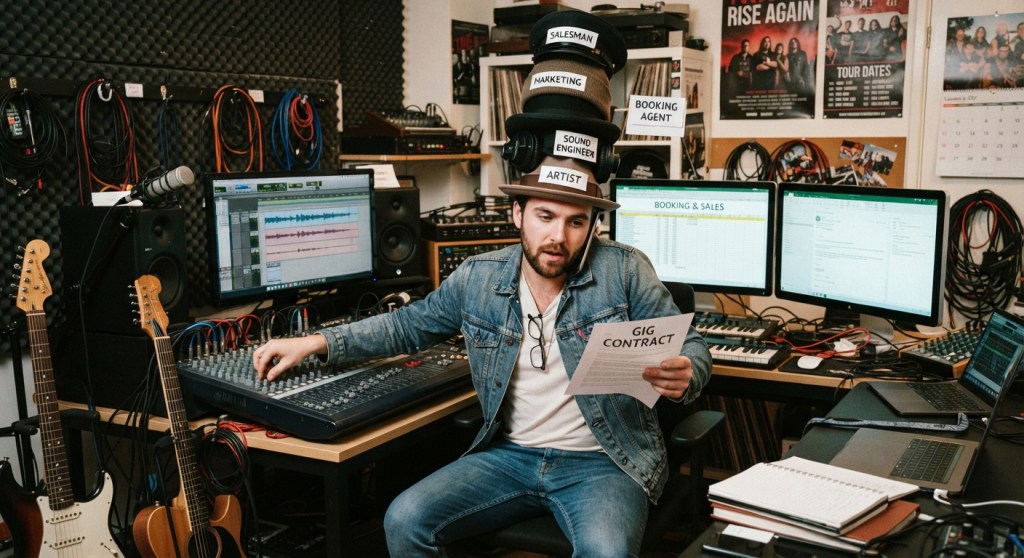
In 2026, the distance between the studio and the screen has practically vanished—and for independent artists, that collapse comes with a heavy tax. Making great music used to be the main event, with promotion, visuals, and business orbiting around it. Today, the orbit has flipped. Many creators feel like they are running a 24-hour media agency and distribution desk that just happens to have a song attached to it.
The pressure is rarely just about craft anymore. It is about stamina, visibility, and constant translation: turning a feeling or a groove into a 15-second hook, a caption, a thumbnail, a pitch email, and an ad budget before the next wave of content buries yesterday’s post.
Feeding the Machine Without Starving the Craft
The hardest part of being an artist right now isn’t necessarily making the record; it’s keeping pace with a feed that treats silence like disappearing. When visibility rewards frequency, posting more starts looking like a survival requirement rather than a creative choice.
- The Content Treadmill: A beat, a verse, or a DJ set takes hours or weeks to shape, yet the format demands endless micro-moments—behind-the-scenes clips, studio angles, reactions, and teasers.
- The Originality Squeeze: When everyone is racing to stay visible, familiar formulas and fast trends can feel tempting because they promise quick traction. True originality—taking time to build a distinct sound, visual identity, or perspective—requires patience in an environment built for impatience.
- Algorithmic Fatigue: Chasing retention metrics can quietly reshape how an artist writes, arranges, or edits. Instead of asking “Does this move people?”, it’s easy to start asking “Will this hold attention in the first two seconds?”
When you wear every hat, the business side doesn’t just knock on the door—it moves into the studio. Budgeting, outreach, analytics, and self-promotion are essential if you want independence and control, yet every hour spent formatting spreadsheets or chasing replies is an hour pulled away from the craft that started the journey in the first place.
Redefining Sustainability on Your Own Terms
There is no magic trick that makes the noise disappear overnight, but sustainable artists in 2026 tend to draw sharper lines around what actually matters.
Consistency doesn’t have to mean constant noise. A steady rhythm you can actually sustain beats burning out on a sprint you can’t keep up.
- Batch the Business, Protect the Studio: Separate « building mode » from « broadcasting mode. » Doing outreach, scheduling, and admin in dedicated blocks protects deep creative sessions from constant context-switching.
- Own Your Hubs: Social platforms rent you attention; your own website, email list, radio syndication, or direct fan channels build lasting ground. Having home turf changes the pressure when algorithms shift.
- Measure Depth, Not Just Volume: A smaller group of listeners who actually care, share, buy, or show up carries far more weight than hollow views that vanish by morning.
Being an artist in 2026 takes real grit. Wearing ten hats is exhausting, and keeping your voice intact while running the whole show is no small feat—but the fact that you’re building something real from the ground up still counts for everything. Keep pushing. Stay creative.


Votre commentaire